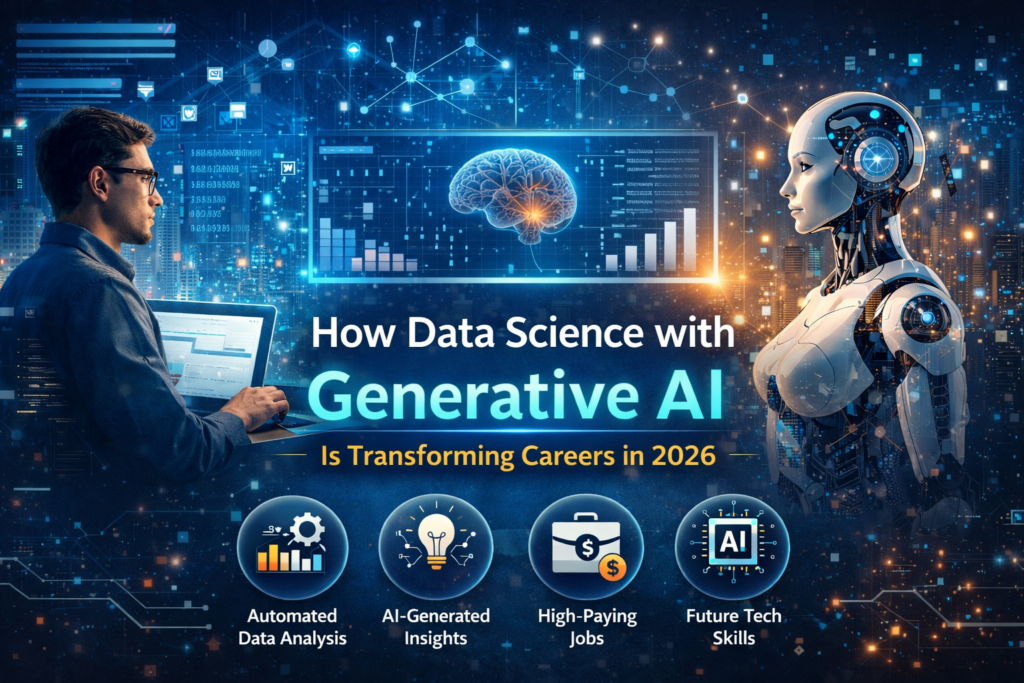
+In recent years, has become one of the most in-demand career fields in the technology industry. However, in , a powerful evolution is taking place with the integration of . This combination is reshaping how businesses operate, how data is analyzed, and how professionals build their careers.
From automating complex data analysis to generating insights faster than ever, is opening new opportunities for students, professionals, and organizations worldwide.
In this article, we will explore how this powerful technology is transforming careers and why learning is one of the smartest career moves today.
Understanding Data Science and Generative AI
What is Data Science?
Data Science is the field that focuses on collecting, analyzing, and interpreting large volumes of data to extract meaningful insights. Companies use data science to make smarter business decisions, predict trends, and improve customer experiences.
Data scientists typically work with tools such as:
-
Python
-
Machine Learning algorithms
-
Data visualization tools
-
Statistical models
-
Big data technologies
What is Generative AI?
Generative AI is a branch of artificial intelligence that can create new content such as text, images, code, and even predictions based on data patterns.
Examples include:
-
AI chatbots
-
Automated report generation
-
AI-powered coding assistants
-
Synthetic data generation
-
AI-generated business insights
When Generative AI is integrated with Data Science, it significantly speeds up the entire data workflow.
Why Data Science with Generative AI Is Booming in 2026
Organizations across industries are rapidly adopting AI-powered data solutions. Businesses now want professionals who can not only analyze data but also build intelligent systems that generate insights automatically.
Key reasons for this boom include:
Generative AI can automatically analyze large datasets and generate reports, saving hours of manual work for data scientists.
For example:
-
AI can summarize datasets
-
Generate dashboards
-
Identify hidden patterns
This allows professionals to focus more on strategic decision-making rather than manual analysis.